
Indo Islamic Heritage


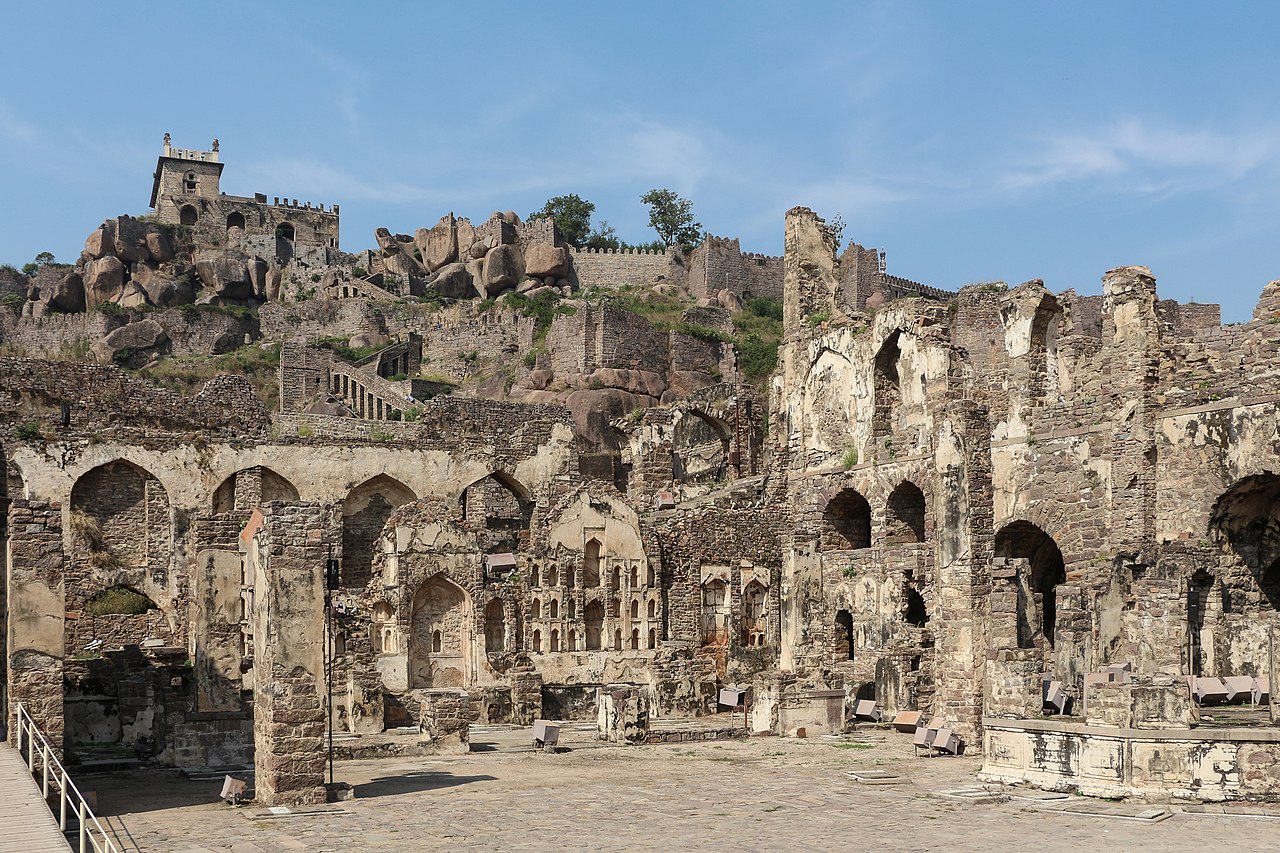
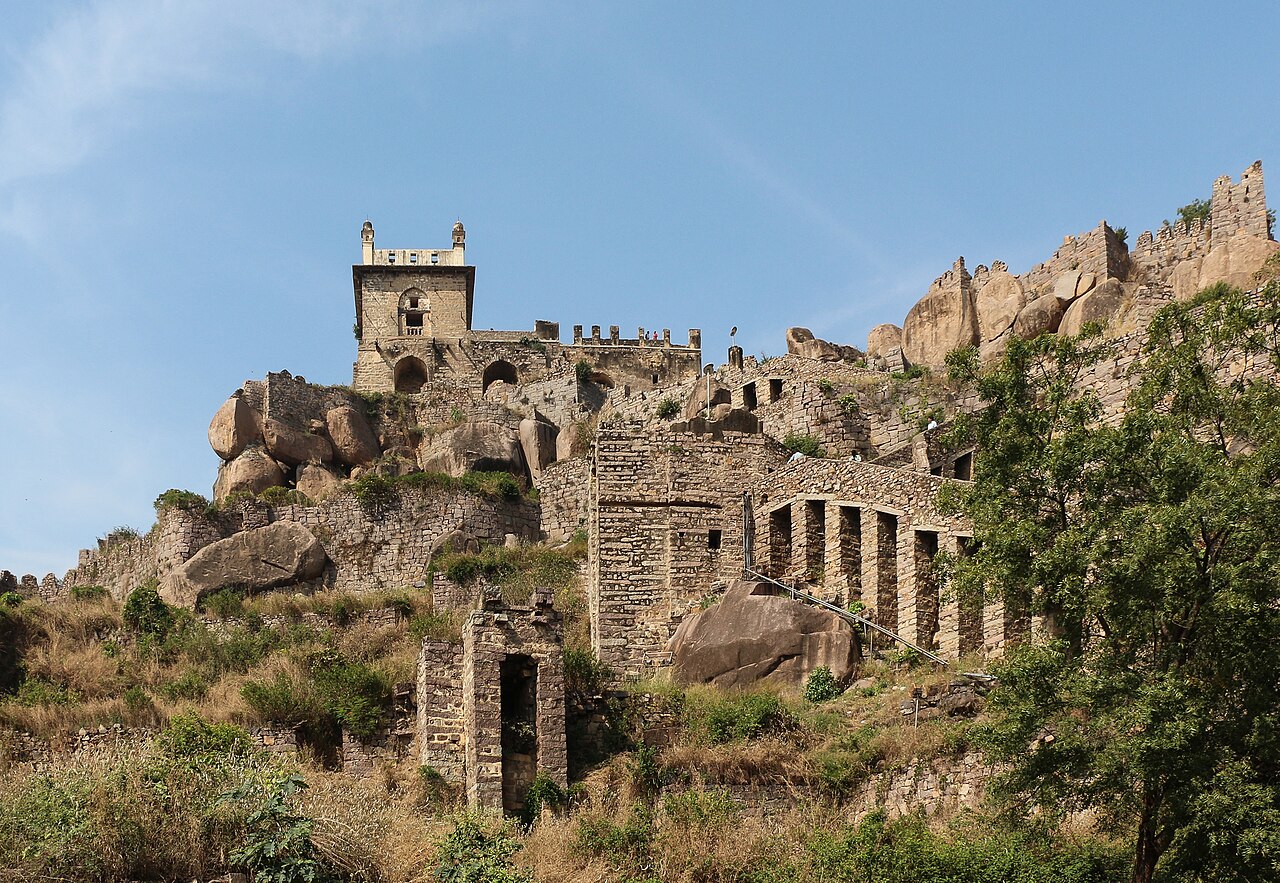
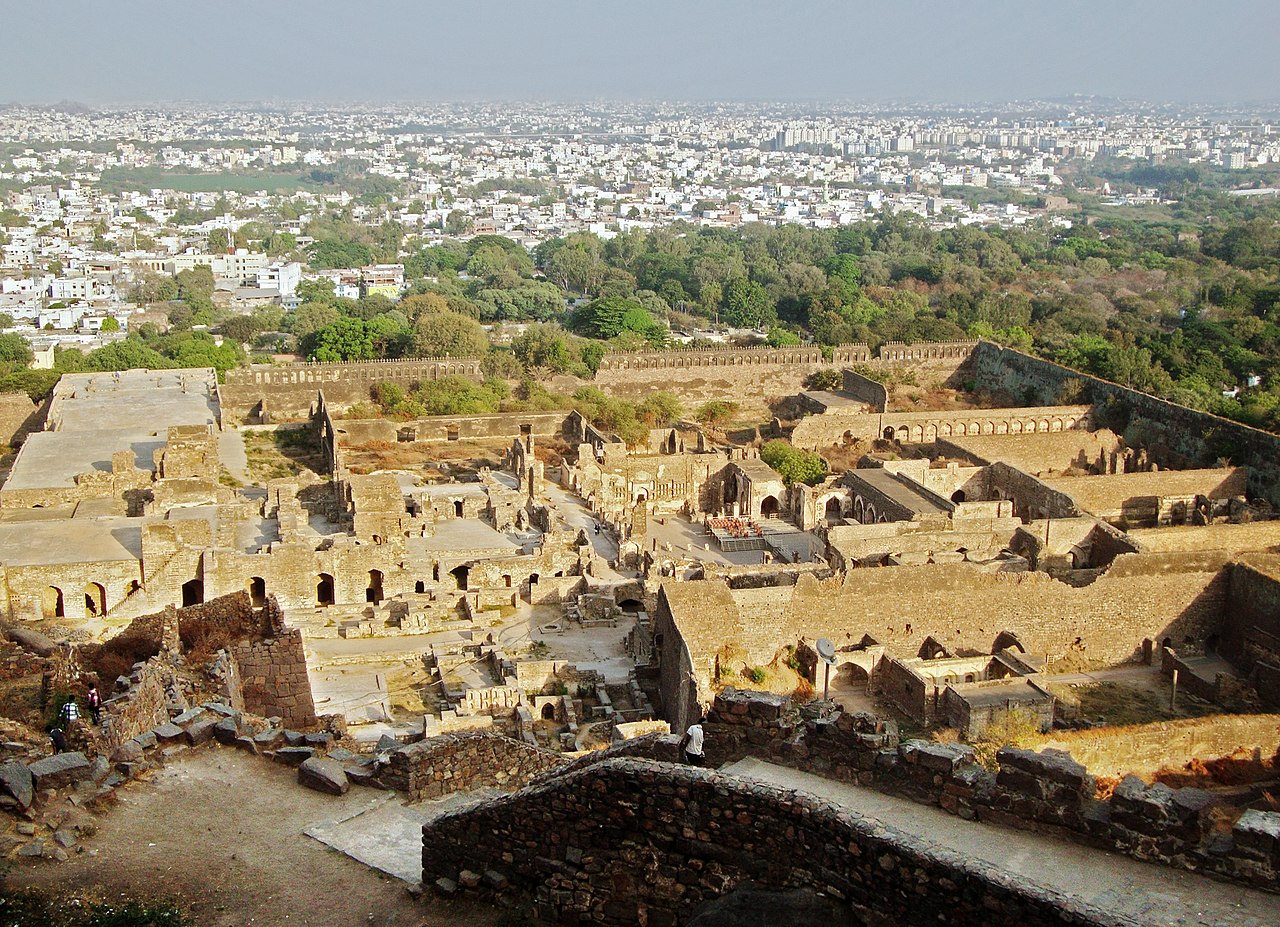
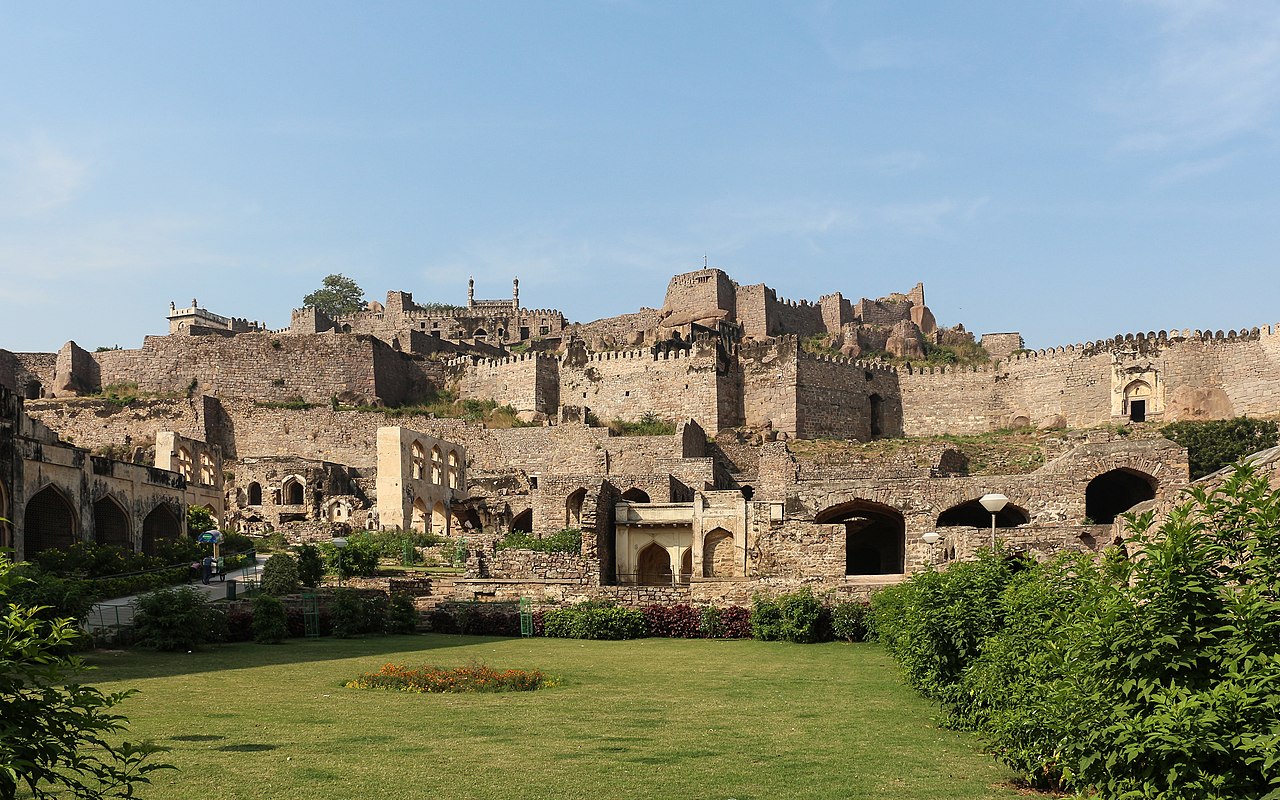
Golconda Fort, a historical site of immense significance, holds a fascinating past that intertwines with the rich history of medieval India. Originally constructed by Kakatiya ruler Pratāparudra in the 11th century, the fort's initial mud walls were later fortified and expanded by subsequent rulers. Under the Bahmani Sultanate, the fort was ceded by the Musunuri Nayakas to the Bahmani kings, and during the reign of Sultan Mohammed Shah I, it became a focal point of conflict, particularly during the Bahmani-Vijayanagar War. After the disintegration of the Bahmani Sultanate, Golconda gained prominence when Sultan Quli, who was appointed the Governor of Hyderabad, fortified the city and established it as the capital of the Golconda Sultanate. Golconda thrived during this period, particularly due to its proximity to diamond mines such as the famous Kollur Mine, making it a significant hub for diamond trade. The diamonds from this region, known as Golconda Diamonds, became highly prized and renowned across the world. However, the fort, now abandoned and in ruins, stands as a testament to the city?s once-thriving trade and royal history. The remnants of the fort complex, with its gates, mosques, palaces, and granaries, still attract visitors, offering a glimpse into the grandeur of the past. Despite the neglect, the fort remains a symbol of Golconda's strategic and cultural importance in medieval India.
The origins of Golconda Fort can be traced back to the 11th century, originally established as a small mud fort by Pratāparudra, the ruler of the Kakatiya Empire. The name "Golconda" is believed to derive from the Telugu words "Golla Koṇḍa," meaning "Shepherd's Hill," reflecting the area?s pastoral heritage. It is also thought that Kakatiya ruler Ganapatideva (1199?1262) constructed a stone hilltop outpost, which later evolved into the fort, to protect the western regions of his empire. Over time, the fortifications expanded and were further developed by subsequent rulers. In the early 15th century, after the decline of the Kakatiya Empire, the Bahmani Sultanate took possession of the fort when it was ceded to them by the Rajah of Warangal. The Bahmani rule saw gradual developments in Golconda, although the fort itself remained of secondary importance until the arrival of Sultan Quli Qutb-ul-Mulk, who was sent by the Bahmanis as governor in 1487. In 1501, Sultan Quli established Golconda as the seat of his administration. As the Bahmani Sultanate weakened, Sultan Quli formally declared his independence in 1518, marking the beginning of the Qutb Shahi dynasty and transforming Golconda into its capital. The Qutb Shahi dynasty significantly expanded the fort over the next several decades. Between 1518 and 1580, under the rule of the first three Qutb Shahi sultans, the fortifications evolved from a modest mud structure to a massive granite citadel. The fort?s outer walls, which spanned 7 kilometers (4.3 miles), enclosed not only the fort but also the city, making it one of the largest fortified complexes in India. The fort's size and grandeur reflected the power and prosperity of the Qutb Shahi dynasty, which ruled from Golconda until 1590. In that year, the capital was shifted to Hyderabad, marking a new phase in the region?s political history. Golconda was not only a political and military center but also a thriving hub for commerce and industry. By the early 17th century, it had developed a robust cotton-weaving industry, producing vast quantities of muslin and calico fabric. The city became renowned for its high-quality, plain, and patterned cloth, with exports reaching as far as Persia, European countries, and Southeast Asia. The fabric was often dyed with indigo for blue, chay-root for red, and vegetable dyes for yellow. These products were particularly popular in regions like Java and Sumatra, where the patterned cloth was in high demand. However, despite its wealth and strategic importance, Golconda's fortune eventually took a turn for the worse. In 1687, after an intense eight-month siege, the fort fell to the Mughal emperor Aurangzeb. The Mughal forces, having gained the upper hand, captured the last ruler of the Qutb Shahi dynasty, Abul Hassan Tana Shah. With the fall of Golconda, the Qutb Shahi dynasty came to an end, and the region was absorbed into the Mughal Empire. Golconda, once a bustling, prosperous city and fortified citadel, fell into ruin, and its legacy as a major political, economic, and cultural center was forever altered. Today, Golconda Fort stands as a remarkable historical ruin, still reflecting the grandeur of its past. Its massive fortifications, intricate gates, palaces, mosques, and chambers serve as a reminder of the fort's former glory, attracting visitors from around the world who come to explore its rich history and architectural marvels.
Year of Built: 11th Century
Address: Khair Complex, Ibrahim Bagh, Hyderabad, Telangana
Country: India
State: Telangana
District: Hyderabad
Pincode: 500008
Longitude: 78.401111
Latitude: 17.383056