
Indo Islamic Heritage


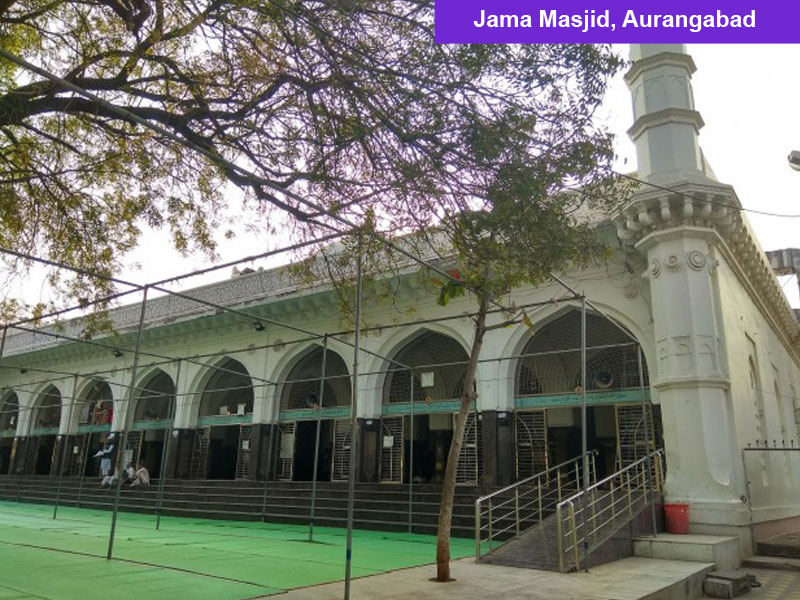
The Jama Masjid in Aurangabad, Maharashtra, is one of the city's oldest and most significant mosques. Constructed in 1612 AD by Malik Ambar, the mosque showcases grand Islamic architecture with its expansive courtyard and elegant minarets. Located near the Killa Arrak fort, it was later expanded by Emperor Aurangzeb in 1692 AD. The mosque remains a central place of worship and a testament to the city's rich Mughal heritage, attracting both devotees and history enthusiasts seeking peace and architectural beauty.
The Jama Masjid of Aurangabad stands as a monumental testament to the city's rich historical and architectural legacy. Erected in 1612 AD by Malik Ambar, the founder of Aurangabad (initially named "Kharaki"), the mosque is among the earliest Islamic structures in the region. Its proximity to the Killa Arrak fort underscores its strategic and cultural significance during the Mughal era. Malik Ambar, an influential statesman and architect, established Kharaki in 1610 AD. Recognizing the need for a central place of worship, he commissioned the construction of the Jama Masjid two years later. The mosque's initial design featured a spacious prayer hall, an open courtyard, and intricately designed arches, reflecting the Islamic architectural aesthetics of the period. Following Malik Ambar's death in 1626 AD, his son, Fateh Khan, renamed the city "Fatehnagar." The region eventually came under Mughal control in 1633 AD. In 1653 AD, Prince Aurangzeb, appointed as the viceroy of the Deccan, chose Fatehnagar as his capital, renaming it "Aurangabad." Recognizing the architectural and cultural value of the Jama Masjid, Aurangzeb expanded the mosque in 1692 AD by adding four arches to its front, enhancing its grandeur and capacity. Architecturally, the Jama Masjid is a masterpiece of Mughal design. Its white fa?ade exudes elegance, while the expansive courtyard provides a serene environment for prayer and reflection. The mosque's minarets, though modest compared to later Mughal constructions, add to its majestic presence. The intricate stucco work and calligraphy adorning the arches and walls exemplify the artistic excellence of the era. Today, the Jama Masjid continues to serve as a central place of worship for the local Muslim community. Its historical significance and architectural beauty attract tourists, historians, and architecture enthusiasts from around the world. The mosque's well-preserved condition is a testament to the efforts of the Archaeological Survey of India, which has undertaken restoration projects to maintain its original splendor. Visitors to the Jama Masjid can experience a blend of spiritual tranquility and historical grandeur. The mosque's open courtyard, capable of accommodating large congregations, is particularly inviting during the early morning and late afternoon hours when the play of light enhances its architectural features. The proximity to other historical sites, such as the Killa Arrak fort, allows for a comprehensive exploration of Aurangabad's Mughal heritage. In conclusion, the Jama Masjid of Aurangabad is not merely a religious edifice but a symbol of the city's historical evolution and architectural prowess. Its enduring presence over centuries underscores the rich cultural tapestry of Aurangabad and offers a glimpse into the city's illustrious past.
Year of Built: 1612
Address: Station Rd, Buddi Lane, Naralibag, Aurangabad, Maharashtra, India
Country: India
State: Maharashtra
District: Aurangabad
Pincode: 431001
Longitude: 75.3433
Latitude: 19.8762