
Indo Islamic Heritage


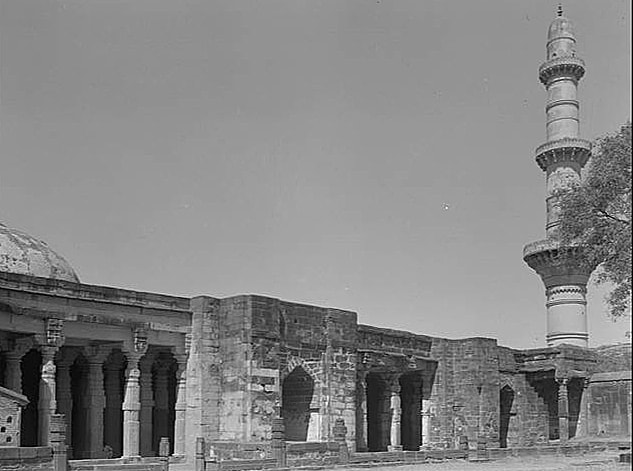
The Jumma Masjid, located within the historic Daulatabad Fort in Maharashtra, India, is a significant monument built in 1318 by Qutb-ud-Din Khilji. This mosque is renowned for its 106 intricately carved pillars, which were repurposed from Hindu and Jain temples that previously occupied the site, reflecting a blend of architectural styles. Originally serving as a place of Islamic worship, the structure has since been converted into the Bharatmata Temple. The Jumma Masjid stands as a testament to the region's rich and diverse cultural heritage, attracting historians and tourists alike.
The Jumma Masjid, situated within the formidable Daulatabad Fort in Maharashtra, India, is a remarkable edifice that encapsulates the confluence of religious and architectural traditions of the 14th century. Constructed in 1318 by Qutb-ud-Din Mubarak Khilji, the mosque was among the earliest Muslim monuments established within the fort's precincts. Its creation marked a significant period in the Deccan region's history, symbolizing the spread of Islamic influence in a predominantly Hindu and Jain cultural landscape. One of the most striking features of the Jumma Masjid is its 106 intricately carved pillars. These pillars were sourced from dismantled Hindu and Jain temples that originally stood on the site, showcasing a pragmatic reuse of materials and an integration of artistic styles. The carvings exhibit traditional motifs characteristic of Hindu and Jain temple architecture, including floral patterns, geometric designs, and mythological figures. This amalgamation results in a unique interior that reflects both Islamic and indigenous architectural sensibilities, offering a visual narrative of cultural synthesis. The mosque's layout adheres to traditional Islamic architectural principles, featuring a spacious prayer hall oriented towards Mecca. The incorporation of temple pillars not only provided structural support but also introduced aesthetic elements that were uncommon in contemporary Islamic structures. This blend of architectural styles is evident in the mosque's arches and domes, which harmoniously integrate Islamic design with local artistic traditions. In recent times, the Jumma Masjid has undergone a transformation, being repurposed as the Bharatmata Temple. This conversion reflects the dynamic nature of cultural and religious identities in the region, illustrating how historical structures can acquire new meanings and functions over time. The temple now serves as a symbol of national unity, dedicated to Bharat Mata, or Mother India, embodying the nation's spirit and heritage. Visitors to the Jumma Masjid can explore the Daulatabad Fort complex, which houses the mosque. The fort is located approximately 13 kilometers from Aurangabad city and is accessible via the MH SH 22 highway. The site offers a rich historical experience, with the mosque standing as a focal point of interest due to its architectural uniqueness and historical significance. The Jumma Masjid's enduring presence within the Daulatabad Fort complex serves as a testament to the region's layered history and the interweaving of diverse cultural and religious threads. Its architectural splendor, characterized by the fusion of Hindu, Jain, and Islamic elements, continues to captivate historians, architects, and visitors, offering insights into the syncretic traditions that have shaped India's heritage.
Year of Built: 1318
Address: MH SH 22, Daulatabad, Maharashtra, India
Country: India
State: Maharashtra
District: Aurangabad
Pincode: 431001
Longitude: 75.3433
Latitude: 19.8762