
Indo Islamic Heritage


7.jpg)
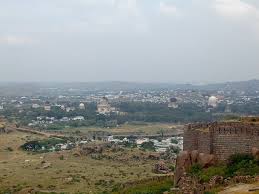
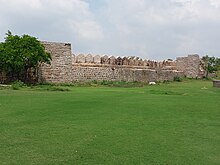
Naya Qila ("New Fort"), an extension of the iconic Golkonda Fort in Hyderabad, India, is a historical gem built in 1656 by Sultan Abdullah Qutb Shah to strengthen the defense against Mughal forces. This segment of the fort complex features remarkable historic structures and intricate artwork, including curious stone and stucco figures depicting animals and other motifs on its outer walls. Despite its rich heritage, Naya Qila remains one of India's least explored heritage sites. Its inclusion in a modern golf course has limited public access, adding to its obscurity and challenges for heritage enthusiasts seeking to explore this historical treasure.
During the reign of Sultan Abdullah Qutb Shah (1625?1672), the Mughal governor of the Deccan Plateau, Aurangzeb, launched a significant offensive against Golkonda Fort in January 1656. The Mughal army, renowned for its might and military precision, unleashed a relentless cannonade against the fort's defenses. However, Golkonda Fort, known for its robust construction and strategic design, withstood the four-month siege. Despite the Mughals? superior firepower, the siege ended in April 1656 with their withdrawal. Nevertheless, the heavy fusillade caused substantial damage to the fort's walls, leaving them weakened and leaning in certain sections. Recognizing the vulnerability and potential threat of future assaults, Sultan Abdullah Qutb Shah initiated extensive repairs to the damaged walls and ordered the expansion of the fort. Thus, the construction of Naya Qila ("New Fort") began in 1656, enhancing the fort?s defensive capabilities. The construction of Naya Qila incorporated advanced architectural features, including rock masonry and wide moats, which significantly strengthened Golkonda?s defenses. This fortified extension made the fort even more impregnable, particularly addressing the vulnerabilities exposed during the Mughal attack. Sultan Abul Hasan Qutb Shah, the last ruler of the Qutb Shahi dynasty, continued to add to and enhance Naya Qila. By the time Aurangzeb became the Mughal Emperor nearly three decades later, the strengthened defenses of Naya Qila were a critical deterrent. When Aurangzeb turned his attention to Golkonda once more, he chose to avoid attacking from the area fortified by Naya Qila, recognizing the strength of its rock masonry and defensive design. However, in 1687, Aurangzeb ultimately annexed Golkonda through other means. The design and construction of Naya Qila, along with other notable structures like the Makkah Masjid and Toli Masjid, were the work of Mustafa Khan, the royal architect of the Qutb Shahi dynasty. His architectural expertise not only reinforced Golkonda?s defenses but also contributed significantly to the architectural heritage of the Deccan region. Naya Qila, with its strategic design and historical significance, stands as a testament to the ingenuity and resilience of the Qutb Shahi rulers and their architects.
Year of Built: 16th Century
Address: Hyderabad, Telangana
Country: India
State: Telangana
District: Hyderabad
Pincode: 500008
Longitude: 78.4088
Latitude: 17.3883